Photo: Chinese Mountains
Mount Wutai
Wutai Shan
Earthly abode of the Bodhisattva of Wisdom — China's holiest Buddhist mountain
About Mount Wutai
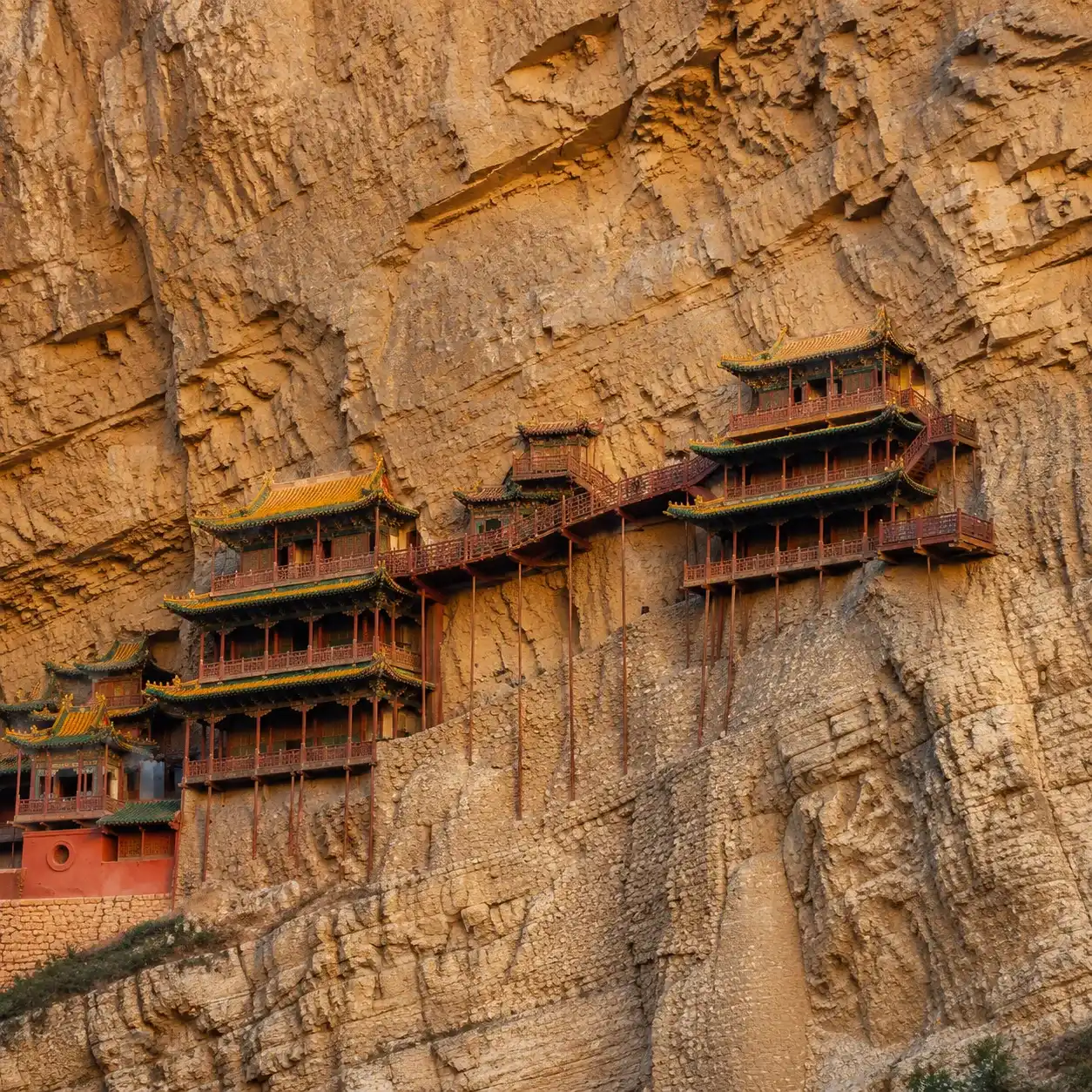
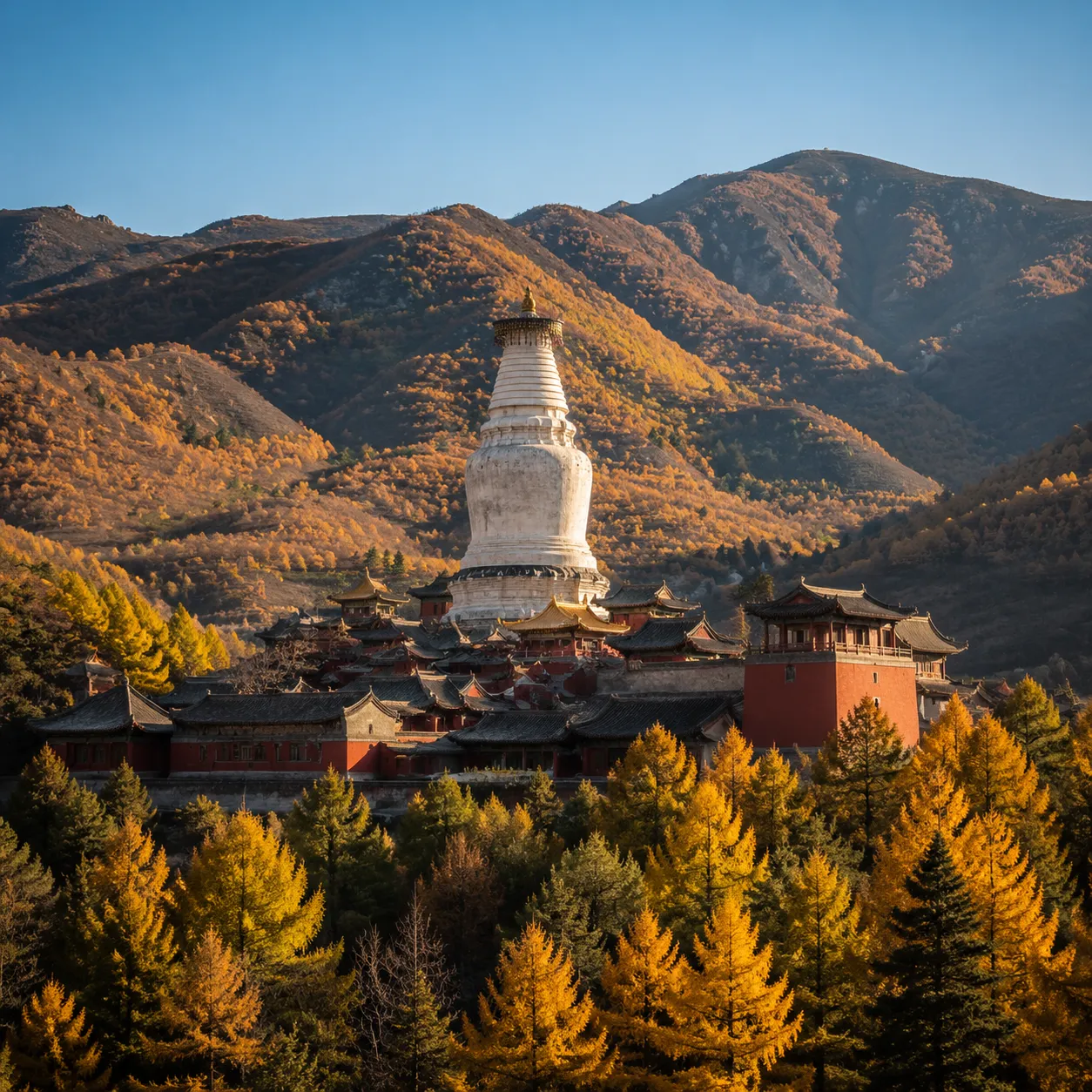
Mount Wutai (Wutaishan) in Shanxi Province is the most important of China's Four Sacred Buddhist Mountains, dedicated to Bodhisattva Manjusri (Wenshu Pusa), the bodhisattva of wisdom. Unlike a single peak, Wutai is a cluster of five flat-topped mountains (the name literally means 'Five Terraces') surrounding a high-altitude valley at 2,500-3,000m, where over 50 Buddhist temples have stood for nearly 2,000 years. The oldest temple, Xiantong Temple, dates to 68 AD — making Wutai one of the earliest sites of Buddhist practice in China. Over centuries, it became a pan-Asian pilgrimage destination, drawing monks from Mongolia, Tibet, Japan, and India. The architectural styles visible here are unique: Chinese timber-framed halls sit alongside Tibetan-style white stupas and Mongolian-influenced temples with their distinctive curved roofs. The 56-meter white dagoba at Tayuan Temple, visible from across the valley, is the symbol of Wutai. At 3,058m, the North Terrace (Beitai) is the highest point in northern China, with snow often persisting into June. Wutai was designated a UNESCO World Heritage Site in 2009. Today, it remains an active center of Buddhist practice — monks in maroon and grey robes are a common sight, and the sound of chanting drifts from temple halls. For visitors, Wutai offers a glimpse of living Buddhism that feels far removed from China's more commercialized religious sites. The summer months (June-August) are the pilgrimage season and the only time all five terraces are accessible, though the valley temples are open year-round.
Mountain Facts
Cultural Significance
The holiest of China's four sacred Buddhist mountains. Home to 53 monasteries.
Highlights
- • Taihuai Town temple cluster
- • Xiantong Temple (68 CE)
- • Tayuan Temple white dagoba
- • Pusading Temple
- • North Peak (3,058m)
When to Go
May to September is the main pilgrimage season. May-June brings the clearest skies and the famous aerial views from the Five Terrace peaks, with temperatures 5-20 C and wildflowers covering the high plateau. July-August is warmest (10-25 C) but wetter, with afternoon thunderstorms common above 2,500m and peak domestic crowds around the temples. September-October offers crisp air, golden meadows, and fewer pilgrims — the best balance for photography and the Dai Luoding 'mini-circuit'. Winter (November-March) is brutally cold (-20 C at the summits) and most bus routes between terraces close, but the snow-covered temples at Taihuai town are hauntingly beautiful. Avoid the week around the Lunar New Year and summer school holidays if you want quiet temple visits.
How to Get There
By Air: Fly to Taiyuan Wusu International Airport (TYN), the main gateway for Shanxi. From the airport, take a direct bus or taxi to Taihuai Town (about 3.5-4 hours, roughly CNY 150-200). By High-Speed Train: The nearest high-speed rail station is Xinzhou West on the Beijing-Taiyuan line. From Xinzhou West, buses to Wutai Mountain depart regularly (2-2.5 hours, CNY 80-100). Taiyuan South Station also offers direct coaches to the scenic area (2.5-3 hours). By Bus: From Beijing, overnight sleeper buses reach Taihuai Town directly (about 8-9 hours). Getting Around: Within the scenic area, a shuttle bus system connects Taihuai Town to the five terraces and major temples (CNY 50-60 per day). Hiking between terraces (the 'Grand Circuit') takes 3-5 days and requires a licensed guide or proper gear. Entry Fee: CNY 135 (peak) / CNY 120 (off-peak), plus shuttle fees.