Photo: Chinese Mountains
Tianmen Mountain
Tianmen Shan
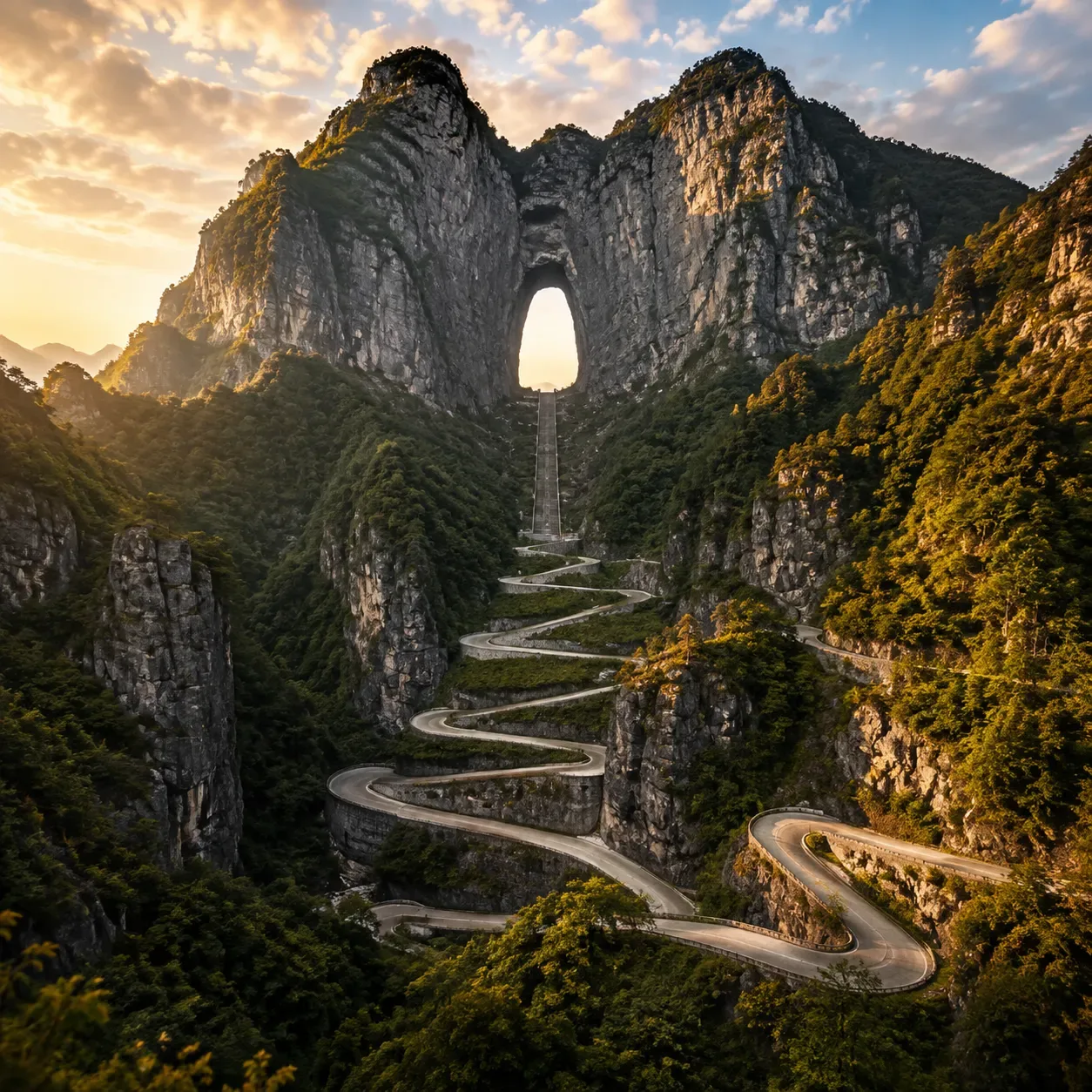
Heaven's Gate — a natural arch and the world's longest cable car
About Tianmen Mountain
Tianmen Mountain (Tianmenshan), located just south of Zhangjiajie city in Hunan Province, is home to one of the most spectacular engineering achievements in mountain tourism: the world's longest passenger cable car ride. Stretching 7,455 meters from downtown Zhangjiajie to the summit at 1,518 meters, the cable car climbs through clouds for 28 minutes, passing over train stations, highways, and suburban rooftops before ascending through mist into a world of sheer limestone cliffs. At the summit, the mountain's defining feature is Heaven's Door (Tianmen Cave) — a natural arch 131.5 meters high, 57 meters wide, and 60 meters deep, formed when a cave system collapsed thousands of years ago. Reaching the arch requires descending (or ascending) the 999 steps of the Stairway to Heaven, a vertiginous staircase built through a narrow cleft in the rock. For those who prefer their thrills without the legwork, Tianmen Mountain offers a glass skywalk — a 60-meter transparent walkway clinging to the side of a vertical cliff face at 1,430 meters, where you walk on glass with nothing but air between your feet and the valley floor below. The mountain is also famous for the Tongtian Avenue (Avenue to Heaven) — a 10.9-kilometer road with 99 hairpin turns that climbs from 200 meters to 1,300 meters, a marvel of road engineering that is as thrilling to drive as it is to photograph from the cable car above. World-class wingsuit flyers and BASE jumpers have used Heaven's Door as a target. Tianmen Mountain is a single-day experience, reachable as a day trip from Zhangjiajie, and while it lacks the multi-pillar landscapes of the National Forest Park, its combination of engineering spectacle and natural drama makes it an essential companion visit.
Mountain Facts
Cultural Significance
Home to a massive natural arch at 1,300m. The world's longest passenger cable car (7.5km).
Highlights
- • Tianmen Cave (131.5m arch, 999 steps)
- • 7.5km cable car
- • Glass Skywalk at 1,430m
- • Heaven-Linking Avenue (99 turns)
- • Ghost Valley Plank Road
When to Go
April-May and September-November offer the clearest views of Tianmen Cave and the most comfortable temperatures (12-25 C). The glass skywalk and the cave are both best in the morning before the cloud base rises; arrive at the cable car station by 7:30 AM. Summer (June-August) is hot and humid at the base, and the summit is often fogged in by midday — if you go, be at the cave by 9 AM. The 999 steps to the cave are brutal in summer heat. Winter (December-February) brings occasional snow and rime ice that makes the cave opening even more dramatic; the mountain road may close during ice storms, but the cable car usually runs. Spring (March) has frequent mist — atmospheric but view-limiting. Avoid Golden Week at all costs: queues for the cable car can hit 3+ hours.
How to Get There
By Air: Fly to Zhangjiajie Hehua International Airport (DYG) — direct flights from Beijing, Shanghai, Guangzhou, Chengdu, and Xi'an. Tianmen Mountain's cable car station is only 10 minutes from the airport and downtown Zhangjiajie. By High-Speed Train: Zhangjiajie West Station (new, 2023) is on the Zhangjiajie-Changsha line (3h from Changsha). From downtown, the Tianmen cable car station is a 5-minute taxi ride. The route: take the 7.45km cable car (the longest passenger cable car in the world) up to the summit — 28 minutes with a mid-station at the famous 99-bend mountain road. Walk the cliffside glass skywalk, take the elevator to the cave platform, then descend the 999 steps or take the escalator and shuttle back via the 99 bends. Entry Fee: CNY 261 (cable car + entry combined, the standard package).
Frequently Asked Questions
Is Tianmen Mountain worth visiting? +
What is the best time to visit Tianmen? +
How do I get to Tianmen Mountain? +
How difficult is the visit? +
What should I bring for Tianmen? +
You May Also Like
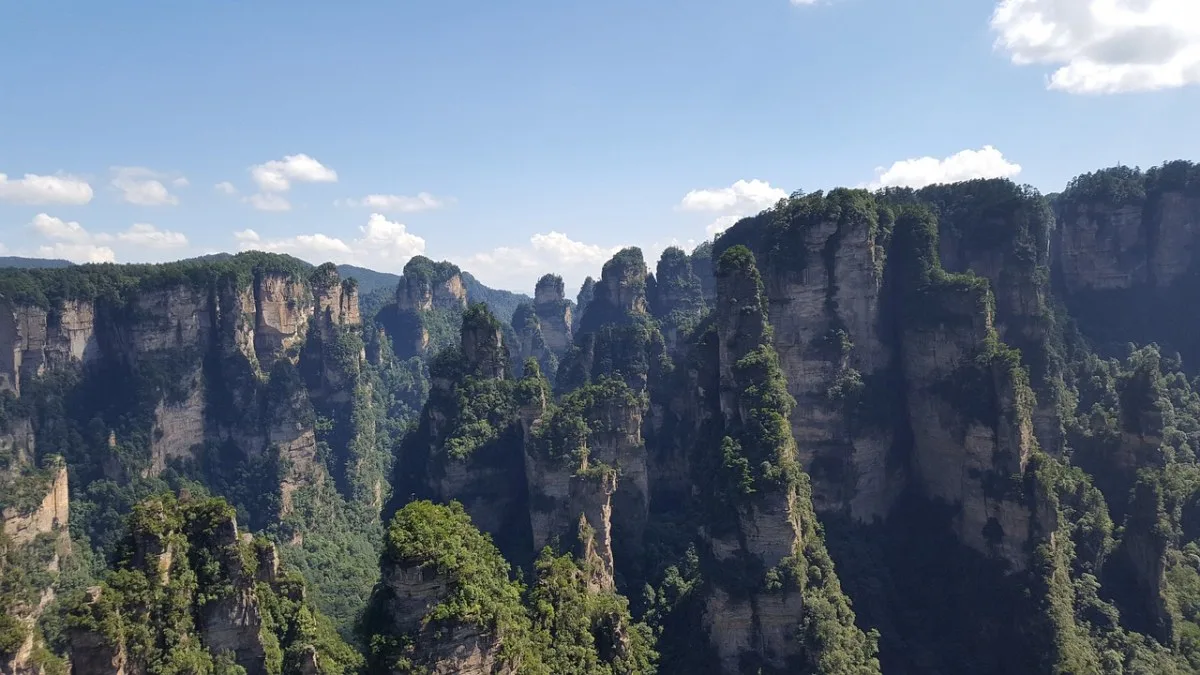
Zhangjiajie National Forest Park
Zhangjiajie · Hunan
Otherworldly quartz-sandstone pillars that inspired Avatar's floating mountains

Wudang Mountains
Wudang Shan · Hubei
Birthplace of Tai Chi — ancient Daoist temples on misty peaks
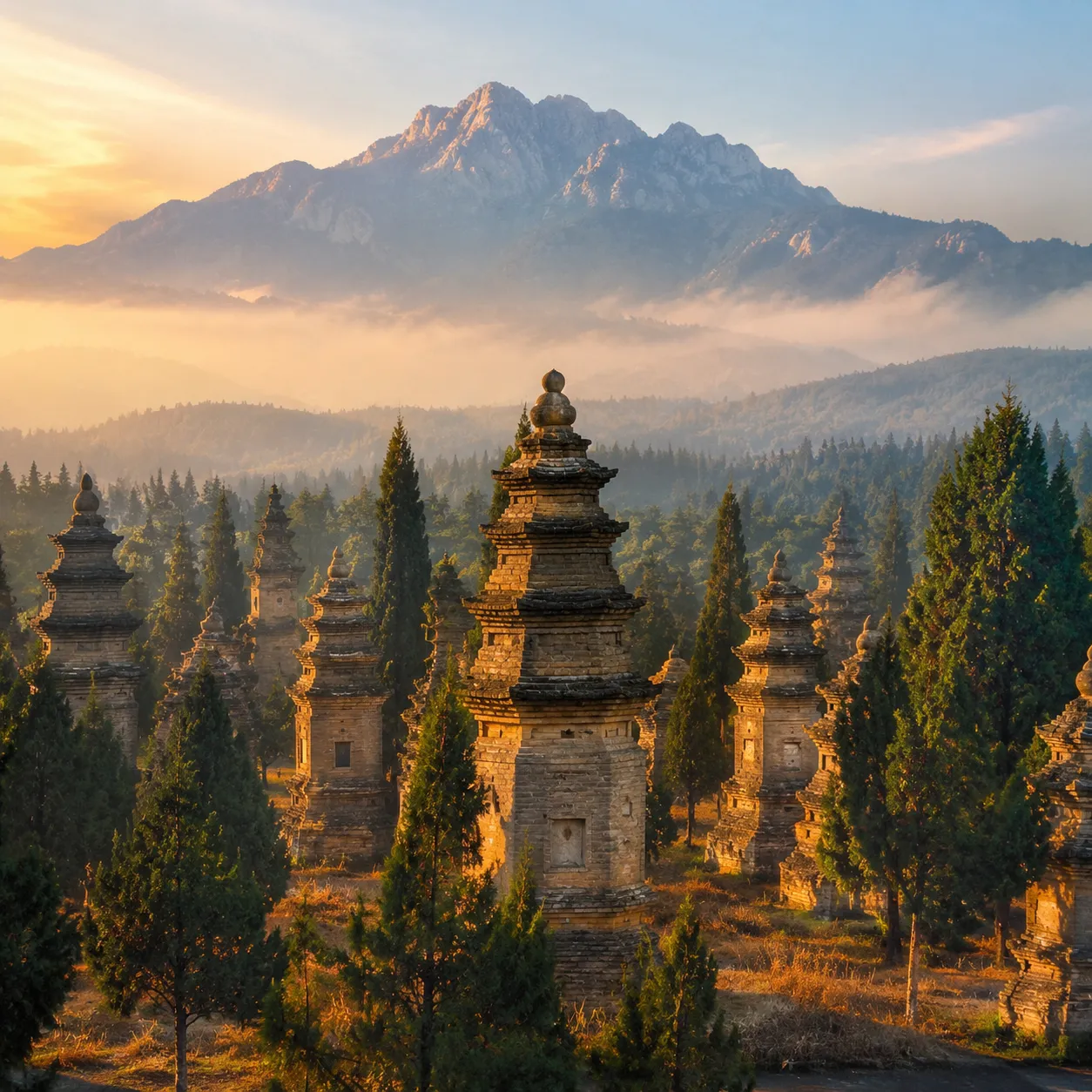
Mount Song
Song Shan · Henan
Birthplace of Shaolin kung fu and Zen Buddhism, the Central Great Mountain